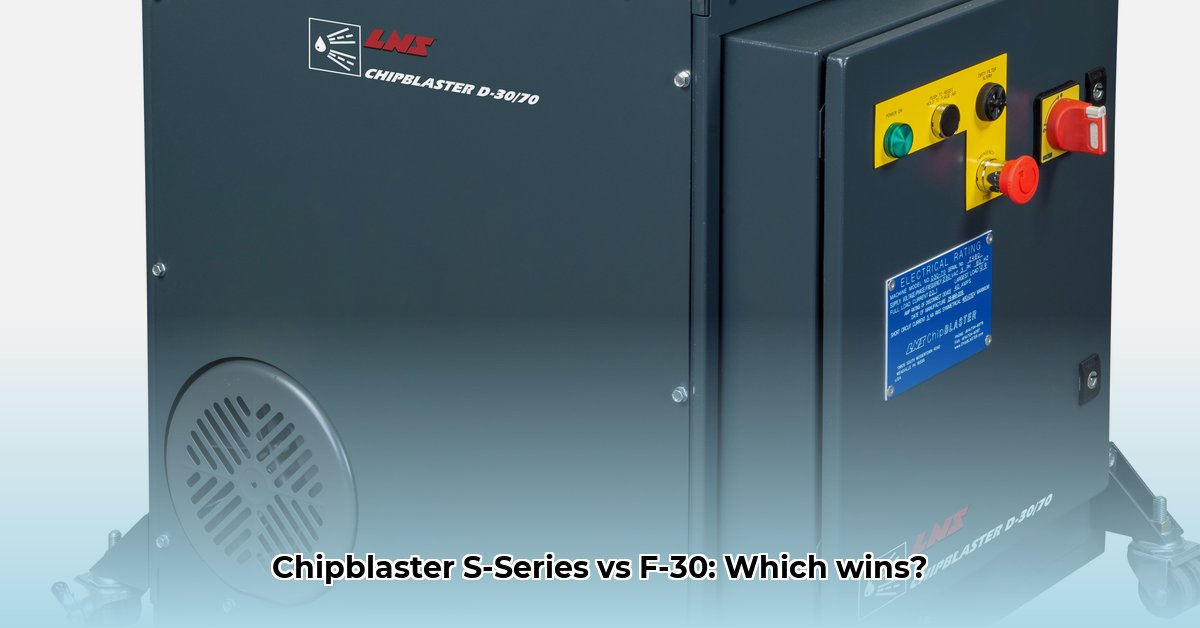
Choosing the right coolant system is critical for maintaining efficient and precise machining operations. This guide compares two leading Chipblaster models—the S-Series and the F-30—to help you select the optimal system for your machine shop. We will analyze features, advantages, disadvantages, and provide a decision-making framework to ensure you make an informed choice.
Assessing Your Shop's Needs
Before delving into specific product details, it's crucial to assess your shop's individual requirements. Consider these key factors:
- Shop Size and Production Volume: Large-scale operations generally require higher-capacity systems.
- Materials Machined: The type of material (e.g., tough alloys versus softer metals) impacts coolant requirements. Abrasive materials demand robust filtration and higher pressure.
- Budget: The F-30 represents a larger initial investment, but may offer better long-term value depending on your needs and planned upgrades.
- Available Space: The S-Series is designed for smaller spaces; the F-30 has a larger footprint.
- Machining Processes: Different processes (drilling, milling, turning) may necessitate specific flow rates and pressures.
Chipblaster S-Series vs. F-30: A Detailed Comparison
Both systems offer effective coolant delivery, but cater to different needs. The following table compares key features. Note that complete specifications for the S-Series are currently unavailable; contact the manufacturer directly for detailed information.
| Feature | Chipblaster S-Series | Chipblaster F-30 | Considerations |
|---|---|---|---|
| Pressure (psi) | To be determined (contact manufacturer) | 1000 psi | Higher pressure generally improves performance with harder materials and higher speeds. |
| Flow Rate (gpm) | To be determined (contact manufacturer) | 8 gpm | Higher flow rates are necessary for larger-scale operations and certain applications. |
| Tank Capacity | Likely smaller than F-30 (contact manufacturer) | 100 gallons | Capacity should align with your typical machining runs and coolant consumption. |
| Filtration | Details unavailable (contact manufacturer) | High-efficiency filtration (specifics require further clarification) | Filtration type significantly impacts coolant cleanliness and machine longevity. |
| Size/Mobility | Likely more compact and portable | Larger footprint, potentially less mobile | Consider space limitations and ease of access for maintenance. |
| Upgrade Options | Limited details available (contact manufacturer) | Extensive (diaphragm pump, cyclone filtration, etc.) | Future scalability is crucial for expanding operations. |
| Initial Cost | Likely lower than F-30 | Higher, but potential for better return on investment (ROI) with upgrades | Consider the total cost of ownership (TCO) including upgrades and maintenance. |
Isn't it vital to understand the pressure and flow rate capabilities before investing? The F-30's 1000 psi and 8 gpm are impressive, but would a smaller, less costly system meet your current needs?
Choosing Your Chipblaster: A Decision Pathway
This decision tree simplifies the selection process:
- Space Constraints: Limited space? If yes, prioritize the S-Series (pending specification verification). Otherwise, proceed to step 2.
- Material & Production: Working with abrasive materials or high-volume production? If yes, the F-30's capabilities are advantageous. Otherwise, the S-Series may suffice.
- Budget: Align your choice with your budget, recognizing the F-30's upgrade potential may provide better long-term cost-effectiveness.
Implementation, Operation, and Maintenance
Installation: Always follow the manufacturer's detailed instructions. Proper grounding, power connections, and coolant line setups are critical.
Operation: Monitor pressure, flow rate, and filter status regularly. Proactive issue resolution prevents costly downtime.
Maintenance: Establish a preventive maintenance schedule including regular filter changes, coolant checks, and component inspections. This extends the system's lifespan.
Safety Considerations
High-pressure systems like the F-30 demand strict safety practices. Operator training, personal protective equipment (PPE), and adherence to safety guidelines are paramount. Regular leak checks are essential. Always consult the safety data sheet and manufacturer's instructions.
Conclusion
Selecting the right coolant system is a crucial investment. While the F-30 offers robust capabilities and upgrade potential, the S-Series might be suitable for smaller shops or those with less demanding applications. However, the lack of readily available S-Series data necessitates direct contact with the manufacturer to obtain complete specifications for informed comparison. Remember to prioritize safety and perform regular maintenance regardless of your chosen system.
Resources
- Chipblaster Website: [Insert Chipblaster Website Link Here]
- Manufacturer Contact Information: [Insert Contact Information Here]